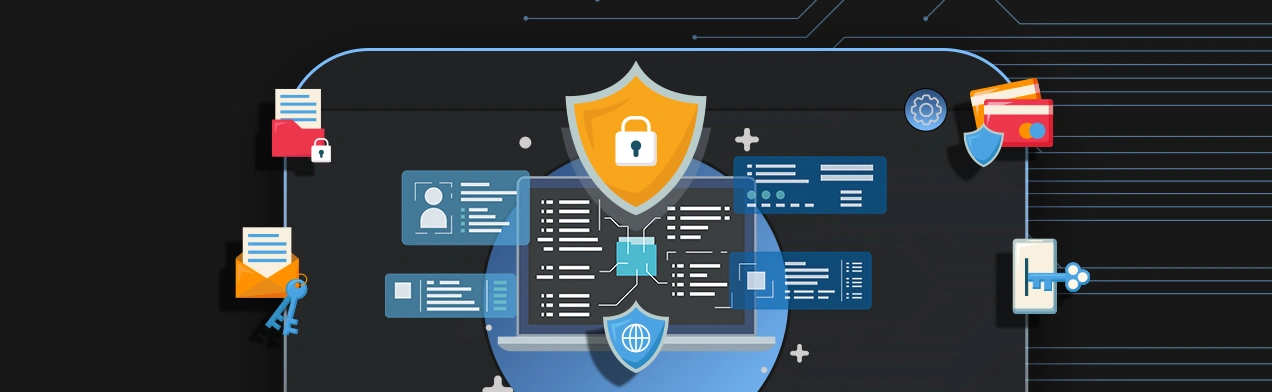
Your SOC, without a SOC team.

Vokter Autonomous takes alerts from your EDR or XDR, investigates what matters, contains threats and documents the outcome — continuously, without a SIEM to operate or a security team to staff.

FIRST LINE RUNNING Triage Enriched, scored and prioritised Investigation Mapped to ATT&CK in seconds Containment Isolate, block, revoke access Reporting Evidence written back for you FULLY MANAGED 0 ANALYSTS 24/7 NO SIEM NEEDED EDR or XDR is enough AUTO-CONTAINED Isolate · block · revoke

Built for organisations that need security operations, not another security tool

Autonomous is for organisations that need continuous security coverage without building a 24/7 operation themselves. Vokter becomes the first line, handling the volume, investigation and routine response around the clock.

No SOC to build

You need continuous security coverage, but building a 24/7 team is neither practical nor economical. Vokter takes responsibility for the first line so your organisation doesn't have to.

Too many alerts. Too few people.

Your security tools can generate more events than a small team could ever investigate. Vokter processes them continuously, separating routine noise from activity that requires attention.

Compliance without another workload

Security incidents need more than detection. They need investigation, response and evidence. Vokter creates the operational record as it works, helping make security activity traceable and audit-ready.

From alert to action. Without the queue.

Vokter takes the first look at every event, building context, examining evidence and determining what deserves action. Routine threats can be resolved automatically, while exceptional cases are held for the right human decision.

Done in 3–8 seconds The alert gets investigated before it reaches your team.
01
Signals arrive
Connect directly to your EDR or XDR, or use Windows Event Collector where there is no SIEM.
02
Context is built
Vokter adds relevant asset, identity and environmental information to the incoming signal.
03
Activity is investigated
The AI reconstructs what happened, maps the behaviour to MITRE ATT&CK and determines the risk.
04
Response is triggered
Where policy allows, Vokter can isolate a device, block an account or revoke access automatically.
05
The outcome is recorded
Findings, actions and evidence are written back to connected systems and reporting workflows.

What you get when the first line runs itself.

Vokter Autonomous gives organisations continuous first-line security without the staffing model of a traditional SOC.

24/7
Continuous coverage without shifts, night rotas or analyst queues.
Seconds
Move from incoming alert to investigation and defined response at machine speed.
0
First-line analysts required to watch and process routine alerts.
Regional
Process and store security data within the jurisdiction and deployment environment you require.

Autonomous, with guardrails.

Vokter is designed to operate independently without operating blindly. Every automated action sits within defined controls, verification checks and response boundaries.

Verified

Decisions are checked against configured rules and relevant security intelligence before action.

Reversible

Automated response is limited to approved actions designed to be reversed when required.

Escalated

High-severity or high-impact incidents can be held for human review before action is taken.

Safe by default

When confidence is insufficient, Vokter stops rather than guessing and waits for the appropriate decision.

Go live without rebuilding your security environment.

Vokter Autonomous works with the security environment you already have. Connect your tools, configure how the operation should behave and move into autonomous first-line coverage without building a new security platform.

01

Connect

Link Vokter to your EDR or XDR, or use Windows Event Collector where no SIEM is present.

02

Calibrate

Configure your environment, assets, identities, risk thresholds and permitted response actions.

03

Go autonomous

Start with supervised operation, validate the results and move the first line to autonomous execution when you're ready.

Latest insights

Engineering for Security & Compliance by Design
01 / 05
Blogs · Application Security · Governance, Risk and Compliance

Engineering for Security & Compliance by Design

Security incidents rarely begin with a breach. More often, they begin with a design decision. Security must be engineered into systems from the beginning.

Read article


Building Secure, Compliant Systems in Regulated European Environments
02 / 05
Blogs · Application Security · Governance, Risk and Compliance · AI Security

Building Secure, Compliant Systems in Regulated European Environments

For regulated European enterprises, 2025 marked the shift from preparation to enforcement. NIS2, DORA, CRA, GDPR, and the EU AI Act apply simultaneously.

Read article
Cyber Resilience vs. Cyber Defense: What Leaders Should Prioritize
03 / 05
Thought Leadership · SOC · Governance, Risk and Compliance

Cyber Resilience vs. Cyber Defense: What Leaders Should Prioritize

Enterprise cybersecurity can no longer be compared to building taller castle walls. Modern threats tunnel underground and exploit vulnerabilities deep within the system.

Read article
Europe Under Pressure: Why Cyber Resilience Is a Regulatory Priority
04 / 05
Blogs · Governance, Risk and Compliance

Europe Under Pressure: Why Cyber Resilience Is a Regulatory Priority

Welcome to the age of cyber resilience. Cybersecurity, through the lens of emergency medicine. You cannot stop every accident from happening.

Read article
CSRD Financial Institutions: Balancing Sustainability Reporting and Data Security
05 / 05
Blogs · Governance, Risk and Compliance

CSRD Financial Institutions: Balancing Sustainability Reporting and Data Security

The Corporate Sustainability Reporting Directive is hitting the financial sector with 1,100+ ESG indicators, redefining sustainability reporting in finance.

Read article
Engineering for Security & Compliance by Design
01 / 05
Blogs · Application Security · Governance, Risk and Compliance

Engineering for Security & Compliance by Design

Security incidents rarely begin with a breach. More often, they begin with a design decision. Security must be engineered into systems from the beginning.

Read article

Building Secure, Compliant Systems in Regulated European Environments
02 / 05
Blogs · Application Security · Governance, Risk and Compliance · AI Security

Building Secure, Compliant Systems in Regulated European Environments

For regulated European enterprises, 2025 marked the shift from preparation to enforcement. NIS2, DORA, CRA, GDPR, and the EU AI Act apply simultaneously.

Read article
Cyber Resilience vs. Cyber Defense: What Leaders Should Prioritize
03 / 05
Thought Leadership · SOC · Governance, Risk and Compliance

Cyber Resilience vs. Cyber Defense: What Leaders Should Prioritize

Enterprise cybersecurity can no longer be compared to building taller castle walls. Modern threats tunnel underground and exploit vulnerabilities deep within the system.

Read article
Europe Under Pressure: Why Cyber Resilience Is a Regulatory Priority
04 / 05
Blogs · Governance, Risk and Compliance

Europe Under Pressure: Why Cyber Resilience Is a Regulatory Priority

Welcome to the age of cyber resilience. Cybersecurity, through the lens of emergency medicine. You cannot stop every accident from happening.

Read article
CSRD Financial Institutions: Balancing Sustainability Reporting and Data Security
05 / 05
Blogs · Governance, Risk and Compliance

CSRD Financial Institutions: Balancing Sustainability Reporting and Data Security

The Corporate Sustainability Reporting Directive is hitting the financial sector with 1,100+ ESG indicators, redefining sustainability reporting in finance.

Read article

Frequently Asked Questions

The answers to the questions that matter when handing your first line to AI.

What is an autonomous SOC?
An autonomous SOC uses AI to perform core security operations with minimal human intervention. Vokter Autonomous continuously triages, investigates, responds to and documents security alerts as the first line of defence.
Can Vokter Autonomous run without an in-house SOC team?
Yes. Vokter Autonomous is designed for organisations that need continuous security operations without building and staffing a 24/7 SOC. G'Secure Labs operates the platform and managed service behind it.
Does Vokter Autonomous require a SIEM?
No. Vokter can connect directly to an EDR or XDR. Where no SIEM is present, it can also work from endpoint signals through Windows Event Collector.
How does Vokter investigate security alerts?
Vokter enriches incoming signals with relevant asset, identity and environmental context, reconstructs activity, assesses risk and maps relevant behaviour to MITRE ATT&CK before determining the appropriate response.
Can Vokter automatically respond to threats?
Yes. Within configured policies, Vokter can execute approved containment actions such as isolating devices, blocking accounts or revoking access. Actions are governed by defined response boundaries.
What happens when Vokter is uncertain?
Vokter does not force a decision when confidence is insufficient. Depending on the configured operating policy, the case can be held for review or escalated for human intervention.
How quickly can Vokter Autonomous be deployed?
Vokter is designed to work with the security tools you already operate. After connection and calibration, organisations can begin with supervised operation before expanding into autonomous execution.
Where is Vokter security data processed and stored?
Vokter supports regional, dedicated and customer-controlled deployment models, allowing organisations to determine where security information is processed and stored according to their operational and regulatory requirements.

Get Started

Bring a sample of your own alerts. We will show how Vokter Autonomous triages, investigates and contains them.

Headquarters · Sweden
Isafjordsgatan 30A, 16440 Kista,
Stockholm, Sweden
Phone: +46 733 690899
consult@gsecurelabs.com